OHASHI Method® Live Series: Reading the Body
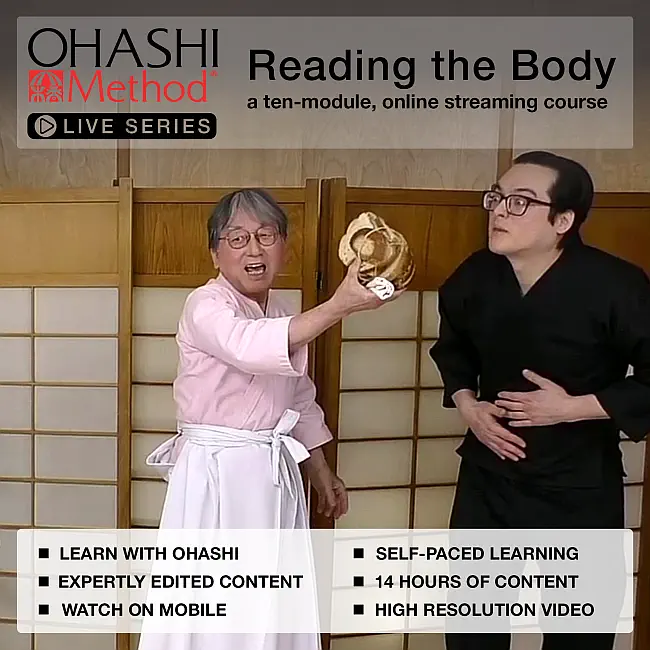
Long before X-rays and MRIs, traditional healers used noninvasive methods to assess personal health, lifestyle, and character. Oriental diagnosis is a topic and discipline that spans thousands of years and many levels of intellectual inquiry. But there are four fundamental approaches that are key to assessing a person’s health and character.
- Bo Shin: Seeing and observing your subject;
- Setsu Shin: Touching your subject, feeling his or her life;
- Mon Shin: Asking questions to obtain information on his or her condition;
- Bun Shin: Listening and smelling
These four approaches are anything but simple; there are layers of inquiry within each method. In a limited amount of time, Ohashi will discuss and show you how you as a holistic practitioner can use these methods to better know your clients and their needs. He will also discuss the differences between Oriental and Western diagnosis.
His discussion covers general face diagnosis, back diagnosis with bilateral distortion, supine-position diagnosis, and movement diagnosis. Ohashi compares Eastern and Western approaches to health with humor and sensitivity, and draws out the precepts and seeming paradoxes of Oriental medicine in a language we can all understand.
He ends the course with his famous “shoe diagnosis” — reading participants’ shoes to analyze the lifestyle, psychology, health, and even financial condition of the wearer.
This course will help you to view the human and natural worlds with new eyes and to discover physical, mental, and spiritual conditions in yourself and others, while reaching a deeper understanding of their unity.
Module One: Comparing Eastern and Western Diagnosis, part 1
In this first module Ohashi compares the difference between Eastern and Western diagnosis. Also, how a practitioner can use Oriental Diagnosis to encourage clients to take a more holistic and lifelong approach to their health.
Module Two: Comparing Eastern and Western Diagnosis, part 2
In part two Ohashi continues to compare Eastern and Western diagnosis. As a practitioner, he encourages you to always look for the positive in your clients’ conditions.
Module Three: Eastern Diagnosis systems
In this third module Ohashi talks about the modes of diagnosis: How the practitioner uses sight, sound, touch and questions to better diagnose intuitively.
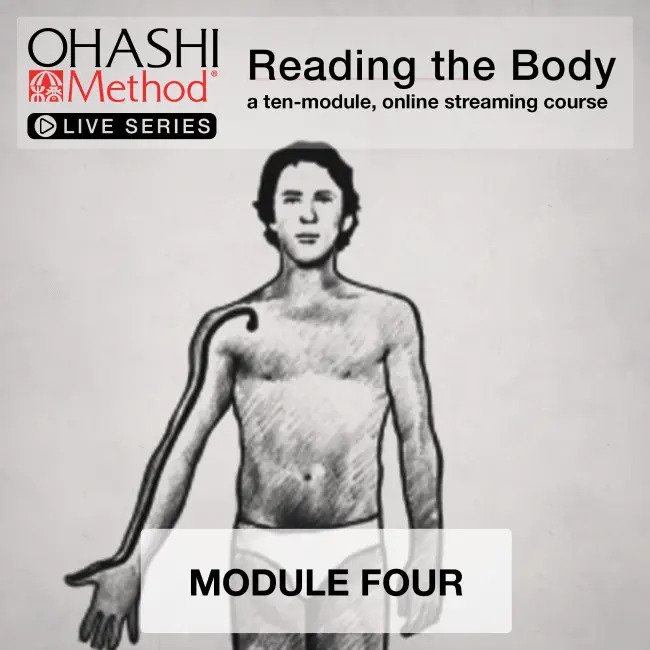
Module Four: Meridians
In this module Ohash discusses the Meridian Systems and how to use them for diagnosis. Meridians carry psychological energy as well as physical energy. Being aware of both aspects is an additional tool for diagnosing clients’ needs.
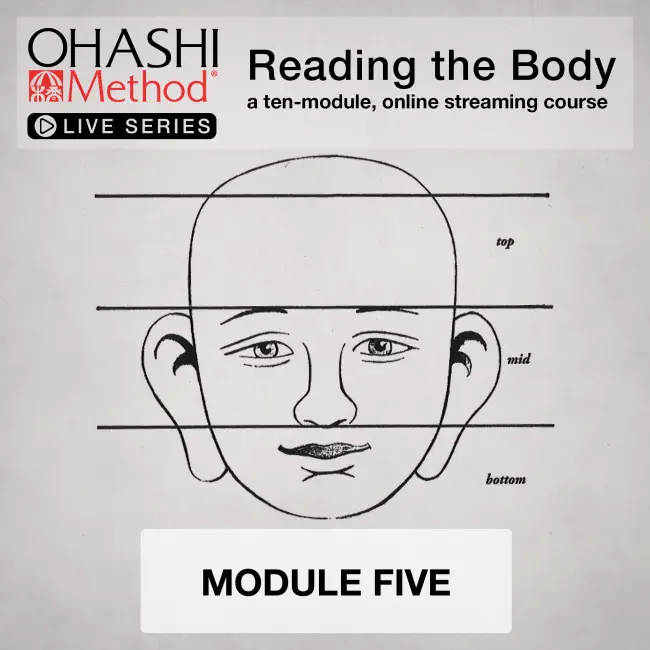
Module Five: Zones of the Face
In module five Ohashi will explain the zones of the face and how to use them for diagnosis. The three main zones of the face reveal general personality traits and lifestyle tendencies.
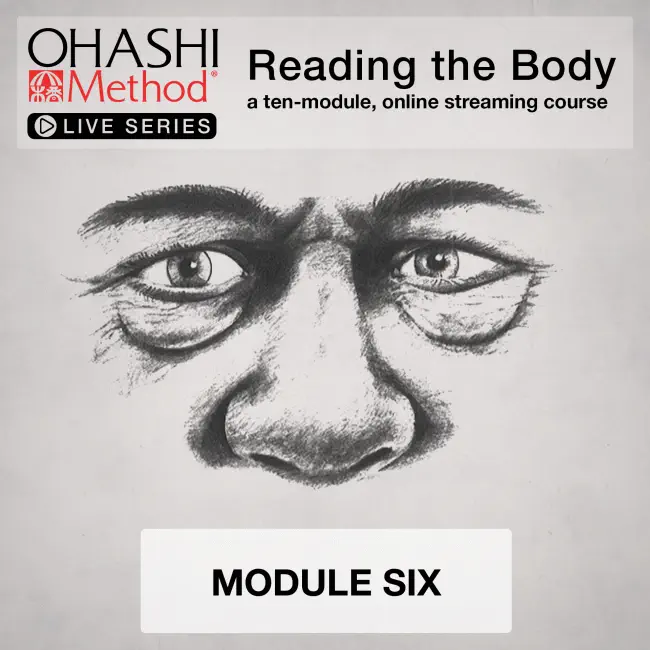
Module Six: Diagnosing the Face
In this sixth module Ohashi discusses, in more detail, the specific organs of the face. How can a practitioner notice characteristics of the mouth, nose and ears to better diagnose their clients’ specific ailments and needs.
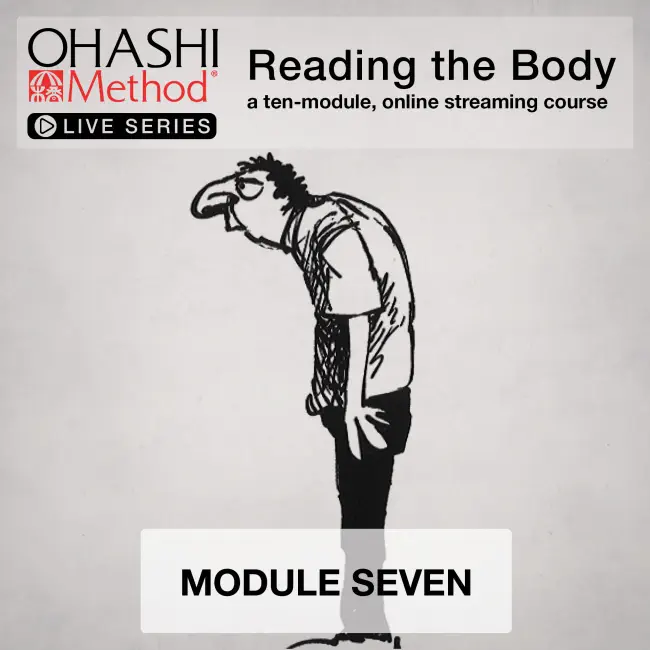
Module Seven: Body Diagnosis, part 1
In module seven Ohashi starts part 1 of Body Diagnosis. Ohashi will focus primarily on the Hara. Diagnosing the Hara allows the practitioner to discover the meridians that need activation or sedation.
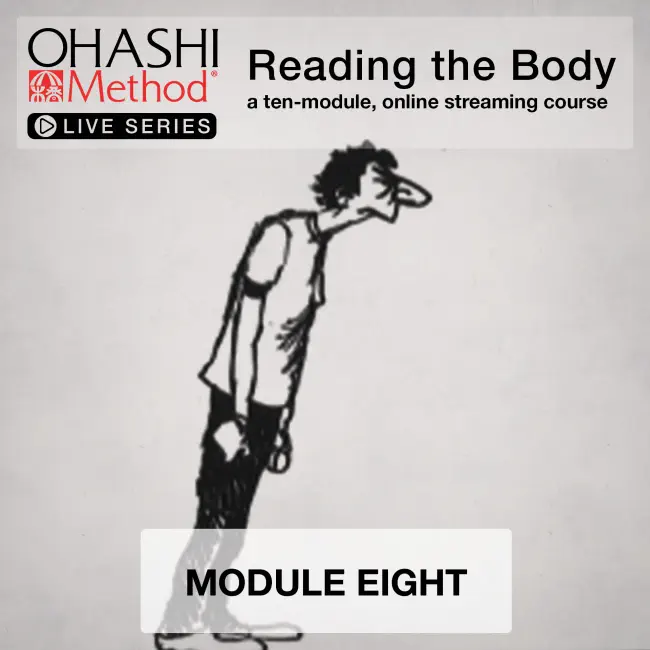
Module Eight: Body Diagnosis, part 2
In this eighth module Ohashi continues his Body Diagnosis. Ohashi will cover topics such as the back, bilateral distortion, legs and feet. How the practitioner can notice these physical characteristics of their clients and use that information to treat them.
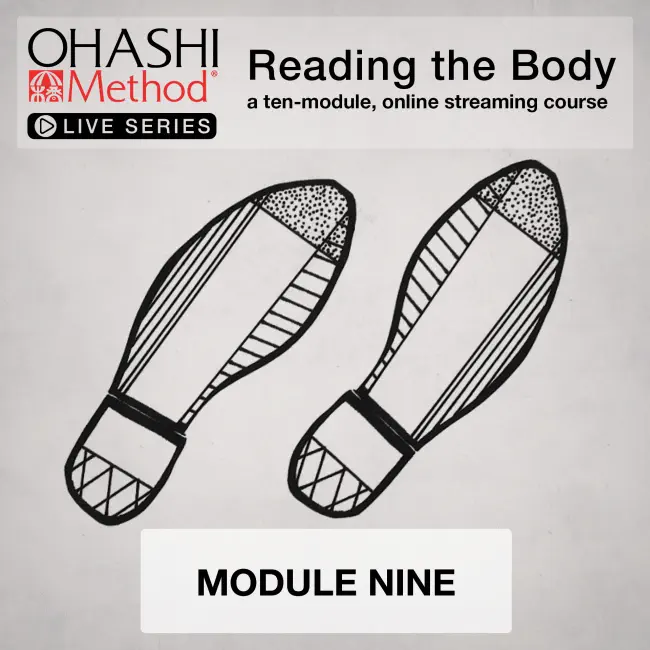
Module Nine: Shoe Diagnosis
In module nine Ohashi shows how to diagnose shoes worn by clients. In more than 40 years of teaching, Ohashi has developed an uncanny ability to “read” the shoes worn by clients and students. Now he will share this skill and show you what shoes reveal of mental, physical and emotional life.
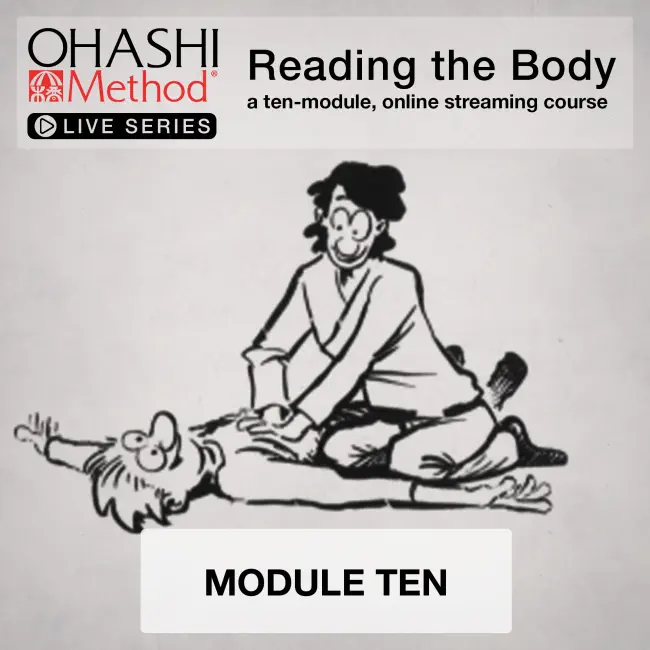
Module Ten: Case studies
In this tenth module Ohashi introduces new information into his teachings. Ohashi will discuss specific health problems clients might be suffering from. These include Parkinson’s disease, high blood pressure, lower back pain and diabetes.
OHASHI Method® is a therapeutic method based on touch, exercise and self-improvement, developed by Ohashi after years of practice, teaching and observing human nature. When you study OHASHI Method® you learn to use exercise, movement, meditation and meridian theory to de-stress and strengthen your mind and body. Your Ki energy will be energized and regenerated. Techniques are simple but powerful. Practice techniques thoroughly before using with clients. The creators, producers and distributors of this program disclaim any liability in connection with the exercises and advice herein.